PS Plus drops a Quantum Dream game ahead of Detroit: Become Human's release, Iron Spider costume revealed for Incognito's Spider-Man, and a major Walking Dead character finally gets confirmed for Season 9 return.
Nintendo and Xbox promote their cross-play ability, Nintendo can "perfectly detect" if you're playing a pirated game on Switch and Hideo Kojima hid something in the new Death Stranding trailer.
War Thunder, which will enter a free-to-play format later this year, is now available for Xbox One. The cross-platform war ground between land, sea and air comes in three purchasable packs, which start at £15.99/19,99€, each with their own unique vehicle, decals and player titles. With over 1,000 military vehicles to choose from, the MMO takes place across 80 maps that have been created from real-life battle scenarios across our history. Playable in both PvP or PvE, War Thunder will appeal to those after an intense battle against other players online or for those wanting to partake in historical campaigns. With land and air squared away, War Thunder Naval Battles is the last piece of the puzzle for Gaijin Entertainment, with Xbox One players able to get access right away, while PlayStation 4 and PC players need to be owners of a Naval Pack for access to the closed beta.
After two fantasy-based jaunts into the Warhammer universe, The Creative Assembly has once again turned its eye to history with the latest Total War game. Previous games have let players wage war and live out their realpolitik fantasies in historical periods like medieval Europe, feudal Japan, and the Roman empire. With Three Kingdoms, Total War is taking on a new era, The Han dynasty, as well as a few new gameplay twists.
Now let's be clear: You should not expect a radically different Total War game with Three Kingdoms, which is probably a good thing. The series has remained one of the strategy genre's most popular titles for a reason, with massive battles featuring detailed environments and troops as far as the eye can see, as well as extensive diplomacy and warfare options on a metalevel. Three Kingdoms looks to expand on all those things.
While Creative Assembly wouldn't dish out details on what new diplomatic options players would be getting, they told me it would be an expanded suite compared to previous games, and that those who loved finding a reason to justify their high-end PCs would find plenty of eye candy here. The developer also told me that those with moderate-powered PCs would have enough graphical options to make the game run well.
The biggest gameplay twist that players can expect is when it comes to the MOBA-like hero of generals (all based on historical figures like Lu Bu and Cao Cao) that carries over from Warhammer. Generals have buffs and powers that can turn the tide of battle, but the new wrinkle is that generals can also build relationships with one in another in a social-link mechanic that's reminiscent of both Fire Emblem and even a little bit of Persona.
During battle, your generals' relationships will change as they fight alongside one another. Sometimes they'll become friends and give each other buffs. Other times, their personalities might grind, having negative effects on your army and maybe even culminating in one of those generals leaving your army to join your opponent's army. This extends to more than just battles, too. Force a general to surrender enough times without executing him, for example, and he may be so impressed by your honor that he joins your army. This system has a lot of potential for adding an engaging level of unpredictability in the campaign, and we can't wait to see more of it in action.
Total War: Three Kingdoms is out next year on PC. You can read our review of the previous game, Warhammer II, .
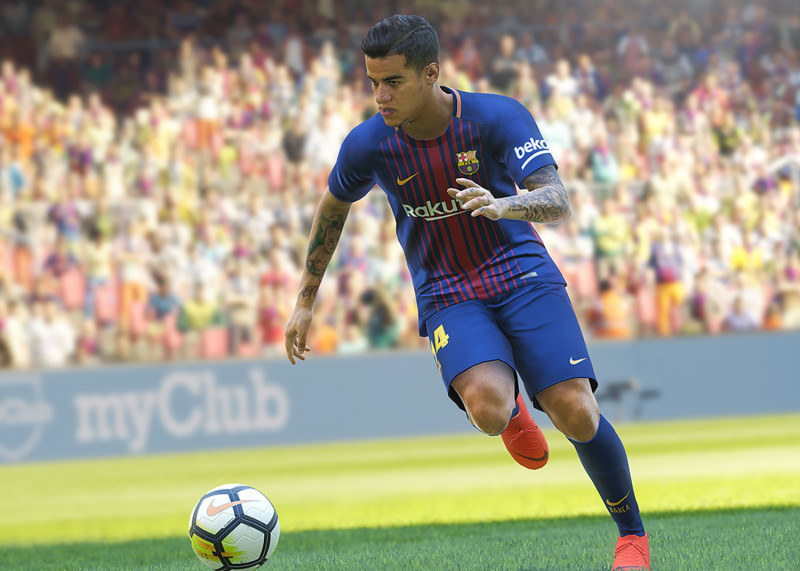
Pro Evolution Soccer’s gameplay has captivated in past years, and after my hands-on with the game at E3 2018 I’m happy to say that realistic but eminently fun gameplay is still the series’ bedrock in PES 2019.
The main thing that strikes me about PES 2019’s gameplay is the ball itself. I’ve always liked the way PES’ ball has felt when shooting and for deliciously weighted through balls, and this year you can definitely see players reacting to it differently from last year. It may take an extra second for a player to bring down that chest-high lofted pass on the touchline or take an extra touch in order to get the ball under control. You can also see it in some passes, as a lofted pass with curve on it forces the recipient to adjust.
PES 2018 made a point to slow the game down, and ironically, the free movement of the ball makes the action tick along briskly even though PES brand manager Andre Bronzoni told me that nothing had been done to the game’s actual speed per se. PES 2019 features snow in appropriate stadiums, and although it does not accumulate, Bronzoni says it and rain will affect the ball.
Elsewhere on the gameplay front during my hands-on time I perceived that players got headers off quicker (requiring less of a windup) and fouls occurred when expected (for both teams) without it being a parade of yellow cards. This was a point of contention last year, and Bronzoni says that some leagues should be more strict about fouls (like in Brazil) than others (such as in Scotland).
Visable fatigue is new element of the game, and I certainly saw players with their hands on their knees while waiting for a throw-in, for example. The onscreen quick sub system (similar to FIFAs) can be used to adddress fatigue, but I don’t think players’ actual fatigue levels (viable in the pause menu) were different from last year. Despite this, pushing fatigued players will lead to injuries, and it will drain players’ overall stamina reserves game-to-game in the Master League mode.
The Master League is an area that PES 2019 needs to succesfully address, and one of the central components is the transfer system. Konami says it’s being overhauled <(a href="https://www.gameinformer.com/games/pro_evolution_soccer_2019/b/playstation4/archive/2018/05/09/pro-evolution-soccer-2019-officially-revealed.aspx">click for some more basic details on the game), but I did not get a lot of information on this front. I am, however, disappointed to hear that outside clubs don’t influence players' transfer prices during negotiations even though they’re listed as being interested the same player you are. Club prestige is a concept, however, that comes into play when it comes to whether players sign with your club or not. Smaller clubs will be out of luck for the big names until they are more established. This has been the case in past Pro Evos, so I’m unclear how PES 2019 is distinct.
MyClub is also getting a makeover, with the most notable being that Konami is releasing special versions of players through the year. It's also ditching the black ball system where scouts and agents based on certain player characteristics are stacked to increase the chances that you’ll pull the player you like.
MyClub in 2019 lets you see who you’re going to sign, although agents are still used to find specific players. Bronzoni wouldn’t say if the packs you’ll buy consist of players, agents, or a mix, but overall he says that the odds of gamers getting the players they want shouldn’t be vastly different.
The developer is still figuring out how it’s going to handle auctions – which had a useful two-stage bidding system – given the big changes to the mode, but the dual stars/GP currencies are the same. Moreover, users can still train players.
Nothing is written in stone just yet for PES 2019 – there are still a lot of details I'd like to know for the Master League and MyClub modes. We’ll have to wait and see how those shake out, but once again gains have been made on the gameplay front that certainly show that the game is putting its best foot forward.
During PlayStation's E3 2018 press briefing, Remedy wowed attendees and viewers with the first trailer of its upcoming game, Control. The trailer was exciting but left more questions than answers. Thankfully, I met with Remedy to see the game in action and learn more about the company's mysterious new world.
Remedy has always been known for narrative-driven experiences, but creative director Sam Lake says the team wants to expand beyond what the studio is known for. “Coming out of Quantum Break, I was concepting this with Mikael Kasurinen, who is our game director,” he says. “We wanted to, first and foremost, create a deep and mysterious world – a many-layered world that players would be drawn back to even when they have played for a long time to explore, find secrets, and piece things together.”
In Control, you play as Jesse Faden, a person who had a traumatic encounter with the unexplainable as a child. The encounter changed her and left her with questions about what she is and what is possible in the world. In search of answers, she travels to the Oldest House, a massive Manhattan skyscraper where the secretive governmental organization in charge of investigating unexplainable things, the Federal Bureau of Control, resides. However, just as she arrives, a mysterious, supernatural force known as The Hiss attack the Oldest House, possessing the employees of the Bureau and killing the Director.
Not realizing what it is, Jesse picks up the Director’s gun. However, the gun is an Object of Power with the ability to morph and shift its powers. In picking up this weapon, Jesse becomes the new Director, placing a target on her back for the possessed Bureau employees. As Jesse turns a corner, a man holding a gun creepily walks toward her. He slowly looks at her and readies his gun. Jesse realizes what’s about to happen and pulls a portion of the floor up to block the gunfire. Turns out the gun isn’t the only powerful part of the main character. She then blasts the debris at the assailant, stunning him. Using her powers, she grabs a computer monitor from across the room and smashes it into him, knocking him down.
“The thing that we wanted from really early on was to make a really challenging experience.”
Exploring the Oldest House is easier said than done. In addition to the myriad enemies trying their luck at taking down Jesse, you also must deal with shifting walls and rooms. Remedy relies heavily on elements of new weird, a subgenre of science fiction revolving around a normal world being changed by a foreign object that is often unexplainable by human science, as well as dream logic. The building behaves unpredictably, but you can sometimes trigger these shifts by performing abstract rituals that require you to think outside the box.
“It’s a Place of Power on its own… this weird, shifting, strange place that’s vastly bigger on the inside than the outside would lead you to believe,” Lake says. “If you know the rules, if the conditions are right, if you know the right rituals, you can keep on traveling – essentially forever – deeper into this building. And step by step, also, leaving our known reality behind.”
Quantum Break placed a heavy emphasis on story, but Lake says this time around, the studio is more focused on the gameplay. Lake and Kasurinen also wanted to deliver a less linear experience where players would want to dive back in time and again to learn more about the world, complete challenges, and discover new things.
This is evident as Jesse comes to a big, long room with multiple doors. Each door leads to different area, giving the Oldest House sandbox elements. As Jesse continues down the path, she comes to a chasm with seemingly no way across. The demoer says that to pass this gap, she must unlock the Levitate ability. Thankfully, Jesse already has this ability, so there’s no need to backtrack to find it. Jesse effortlessly glides across and continues down the path.
As you play, you encounter multiple side-missions. The optional quest I see is a guy who’s stuck staring at a refrigerator. He tells Jesse he’s been stuck staring for days without rest or food and he’s hoping she can relieve him of his duties. I’m not sure what that would entail, but there’s no time for that. Jesse leaves the poor soul behind and continues along her way.
As the demo nears its end, Jesse encounters Rooney, the head of security. Unfortunately, the Hiss have gotten to him as well, and he is much more powerful than any other enemy she’s encountered at this point in the demo. Rooney possesses similar skills as Jesse, but he seems faster and has more projectiles. After shooting him and smashing him with several pieces of debris, Rooney gives one last-ditch effort, but Jesse expertly dodges it and delivers the killing blow.
Jesse leaves the room and enters a bright, white room. She walks toward a massive upside-down black triangle – The Astral Plane. The demo ends after the impressive boss battle, and I’m left wondering what will await her in the Astral Plane.
Control feels like the ultimate realization of what Remedy has attempted in past games. “I would like to think that with each project, we learn what works and what didn’t work that well,” Lake says. “We always want to bring in new elements and try out new things. Here, I think we’ve done a bit more of that than times in the past. But also, I feel there will be a lot of things that the fans will see the evolution of and where certain things have come from.”
The more open structure, the powers Jesse wields, and the abstract shifting building lead to a complex title to wrap your head around. Control looks to keep players on their toes more than other Remedy games.
“The thing that we wanted from really early on was to make a really challenging experience,” Lake says. “We are dealing with weird concepts, but also from the gameplay side and storytelling side, if you have a linear game, what you end up doing is you are holding the player’s hand and leading them through the experience. ‘Look now, here is the next thing. And you go straight down the hall, and then you see the next thing.’ We decided very early on that this is hands off. We are not helping. We want this to be more player-driven, and the player goes in and pursues the things they are interested in. We are serving fewer things on the platter for you, and leaving you more to piece together for yourself, and try out and experiment, and discover, and learn. We do believe that this will make it more engaging and more rewarding.”
I can’t wait to see what else Control has in store when it launches in 2019.
Despite the overabundance of zombie games on the market, the original Dying Light stood out from the undead horde thanks to its first-person parkour mechanics, gritty melee combat, and dynamic day/night cycle (you really didn’t want to get caught outside after the sun went down). For the sequel, Techland is not only improving upon these pillars, but also introducing a wealth of narrative choices that will shape the very city you find yourself in. Here are five big takeaways from our hands-off demo.
Improved Parkour The ability to climb, jump, and slide your way through the city of Harran gave players a fighting chance in the original Dying Light, and Techland is literally doubling down on mobility for the sequel – players have twice the number of parkour abilities at their disposal compared to the first game. During our demo, we saw the player slide under railings, hop across the tops of lamp posts, swing around corners on a rope, and slide down a banner Errol Flynn-style by slicing through it with a knife. Dying Light 2 also introduces parkour attacks and parkour puzzles. Parkour attacks allow players to take down enemies while navigating the environment – examples during our demo included kicking a bandit while vaulting over a waist-high gate, and knocking another enemy off of a building while swinging from an overhead bar. Parkour puzzles, on the other hand, take a bit more planning. Players will encounter certain areas that require them to string together a combination of moves before their stamina bar depletes. In our demo, the player was tasked with navigating the inside of a water tank; each successive leap and climbing action took off another chunk of his stamina bar, until he reached a platform he could stand and rest on. Other sections were more timing-focused, requiring him to combo wall-runs into jumps and monkey-bar swings to reach the top. The fluidity and variety of Dying Light 2’s traversal reminded me less of the first game and more of Mirror’s Edge – albeit with more zombies.
More Complex Combat Dying Light 2 takes place 15 years after the infection, in the last city humanity has left. As such, humans are as big of a threat as the undead – most of the enemies the player encountered during our demo were club-wielding bandits. All in all, the melee combat seemed even more complex and deliberate than the previous game, with enemies changing stances during encounters, requiring the player to block, dodge, and time their attacks when they see an opening. You can also use environmental objects to your advantage – the player in our demo finished off one particularly adept enemy by picking up a bucket and hurling it at his head, before giving him the aforementioned parkour swing-kick down to the pavement below. Taking on even just two bandits at a time seemed challenging, so if you get on the wrong side of an entire gang of enemies, you may want to put your parkour moves to good use.
Deadlier Undead While our demo mostly focused on human enemies, the undead are also getting an overhaul. Techland says that in the original Dying Light, nighttime was scary, but not complex. As such, the developer is revamping the infected to feature both independent and group A.I., which will result in more complex behavior from our undead counterparts. Players can expect to run into bigger hordes of slow-moving zombies on the streets during the night, as well as faster and more agile zombies on the rooftops. During the day, the infected will congregate in nests inside darkened buildings. We got a peek at one of these nests during our demo, when the player ducked into an old, abandoned department store. Over a dozen enemies stood eerily among a collection of mannequins, grunting and sniffing as the player tried (in vain) to sneak around them. While stealth is an option, Techland says that most of these nests will contain valuable loot if you clear them out – and manage to stay alive during the process.Your Choices Matter Dying Light 2’s biggest change is how you affect the city itself. Each choice you make during missions will shift the balance of control between the game's various factions, which in turn affects the state of the city (scroll between the above images for a visual example of how the city might change). In the demo we watched, the player had the choice to relinquish control of the water tower he scaled to either an organized force called the Peacekeepers, or a pair of less-than-reputable entrepreneurs. If you side with the Peacekeepers (and then wait a few in-game weeks), the city transforms into a cleaner and more secure environment. Squads of Peacekeepers will attack any zombies they find shambling in the streets during the day, and help clear out zombie nests. New shortcuts such as ziplines and pulleys also become available, and the water tower you handed over to the Peacekeepers provides fresh water to the entire population via fountains throughout the city. However, there are downsides to aiding the Peacekeepers as well – the faction isn’t particularly big on democracy, and holds public executions to discourage or dispatch of anyone who breaks their rules. If you side with the water-stealing bandits, on the other hand, the citizens remain free to do as they please – but they also don’t have the added security that the Peacekeepers provide. The city looks more rundown and dangerous in this scenario, and you’ll run into destitute survivors begging for water, as the criminals you handed the tower over to charge a premium price for a drink. On the bright (and somewhat cynical) side, however, your “business partners” will supply you with a share of the revenue from their endeavor. How do you live with yourself?! Techland is taking these player-driven choices seriously; the developer has hired on famed game designer Chris Avellone as the Dying Light 2’s narrative designer, and hired members of The Witcher 3’s writing staff to help craft compelling choices. The decisions you make will also open up entirely different areas in the city. For instance, if you sided with the bandits, a massive black market called La Puerta will open in the city, with new NPCs that you can interact with, adding another layer of replayability to the game.
The Game Is BIG Techland is no stranger to creating big games; not only did the original Dying Light take place over two sprawling open-world maps, The Following DLC introduced a third map that was twice as large as the two previous locations combined. Dying Light 2 ups the ante yet again – Techland says the new city you’ll be exploring is four times the size of all the previous maps put together. While bigger doesn’t inherently mean better, our demo already showed the player having way teraction and influence over the environment than the previous game. Add to that the increased parkour abilities, deeper combat, and the return of four-player co-op, and Dying Light 2 may just keep fans busy until the actual zombie apocalypse.
Dead or Alive 6 was announced last week, the first full sequel in the series since Dead or Alive 5 released in 2012, and Dead or Alive 4 in 2006 before that. The series does not treat full sequels lightly and tends to try and interpret the wishes of its community through their own development lens with new features and characters and overall focuses with each new game. With Dead or Alive 6, Team Ninja and KOEI Tecmo are trying to fit the 22-year-old series into a more modern mold while not leaving what fans like about the series behind.
The new big addition to Dead or Alive 6 is the Fatal Rush button. Much like a lot of other modern fighting games, Dead or Alive 6 adds an auto-combo button, but places it as its own separate skill. Gone is the Power Blow from the previous game, with the button replaced by a combo that does fairly significant damage to the enemy. If the meter is full, a Fatal Rush culminates in a move similar to what a Critical Blow in Dead or Alive 5 ended with.
Unlike with most auto-combo functions in fighting games, DOA focuses heavily on reversal mechanics, making Fatal Rushes difficult to use against someone who knows where attacks will be coming from. As a method to make their game friendlier for casual players, the Fatal Rush seems to put a hard ceiling on how far a new player can go with it until eventually it becomes useless for competitive play. Combo variety has always been required to make DOA competitive, so making a combo that plays out the same way the entire time feels like the game has almost solely dedicated a button to training wheels that will eventually become vestigial.
Far teresting is the Fatal Reversal, which used the Fatal button and a direction to essentially dance around an enemy attack and appear behind them, with them completely stunned. With the ninjas, this obviously manifests itself as disappearing and reappearing behind them, but every character has their own unique flourish and animation to make it looks flashy and visually interesting.
The game as a whole is making a concerted effort to display a more modern version of cool. Of particular note are the UI and presentation in the demo, which are leagues ahead of the previous game, with special mention being given to the game's gorgeous character select screen. It gives the game more personality than the stark black and white industrial mid-2000s look of DOA5.
The demo had an option for the story mode, which was greyed out for our build. Game director Yohei Shimbori told us that they plan to include the story in a similar manner to Dead or Alive 5, but cautions that they will be tweaking the structure “because the story of the last game was hard to understand.” The previous game’s story mode jumped around to different times to hide a plot twist that was not made particularly obvious in the story.
During Dead or Alive 5’s development, Team Ninja was reactive to community concerns and worked to fix them before the game’s release. Whether or not the community will find long term issues with the new Fatal action system, it might be something Team Ninja needs to take a closer look at before Dead or Alive 6 launches in 2019 on PlayStation 4, Xbox One, and PC.